Pennywort (Centella asiatica) is a perennial herb that I have been growing in my garden for some years now.
It is relatively easy to grow, and requires little to no maintenance to survive. It grows and spreads by sending out stolons which then develop adventitious roots at the nodes. Because of this habit it should be grown in pots or divided beds because if left unchecked can become a weed.
Pennywort can be grown in a range of soil types from clay to sandy. Thrives in moist humid conditions.Will require plenty of watering during warmer months to ensure re-growth, assuming it will be harvested. I personally think saturating the soil once about once a week is better than daily watering. During winter pennywort will not die back if the soil is kept moist. I do not water or weed from about February to September and the plant does die back (about 30-40%) but never completely. This does have its drawbacks however. The mature leaves will be smaller and have a bitter taste but this doesn't bother me because I only harvest and make drinks during the summer (have no time during school/uni), so I completely neglect them during the school term. Some people with hot houses are able to have good harvests all year round, mine are grown in a garden bed on the south side of the house and undercover which means it cannot get watered via natural means (rain).
Overall I reckon it is an awesomely easy herb to grow, you can look after it and it will thrive or you can neglect it for most of the year and it will not die. For me, it adds another flavour to summer aside from the usual lemonade or soft drink when the weather heats up. Below is just a quick guide to making a drink from pennywort.
The leaf and petiole of the plant is normally used fresh, in salads and drinks. Harvesting is simple. You could save yourself separating weeds from leaves during washing by picking them individually by hand. Or just run a knife horizontally near the surface of the soil and collect what ever has been cut. Weeds and other plants will need to be removed before processing. I use the second method because it is much quicker and the plant will not die if stolons are cut or completely uprooted.
Leaves must be thoroughly washed to remove all dirt, bugs, etc. Leaves are then added to a blender with water. You could do any ratio and this will determine how concentrated the final product is. I just fill the blender with as much leaves as possible then fill with water so that it just covers the leaves. Blend unit you have a fine mush. Approximately 2-3 mins. The whole mixture is then sieved with the plant material being separated and thrown away (I just chuck mine back into the garden). The resulting juice is then consumed as it is, ice cubes are always nice. Make sure to refrigerate if not consumed within one day. Some people do not like the 'grassy' taste so sugar is often added. I try to lay off the sugar so add coconut juice instead which is more common in Vietnam.
(picture of my pennywort bed will be up soon)
 |
| Fancy way to drink rau ma |
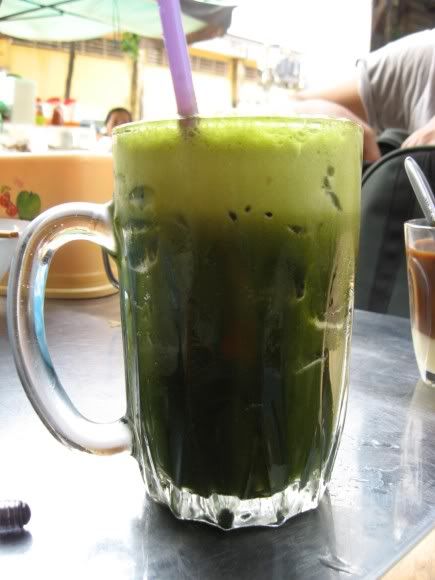 |
| Best way to drink rau ma |

I can see this being a fantastic new addition to my garden. Never heard of it, but it sounds like a great plant. No doubt its very healthy too
ReplyDeleteI was actually going to do a whole post on its health benefits but not sure if I will have time to tonight. I knew it was healthy but quick musings over websites have sort of given it a super herb kind of name. By super I mean able to cure all sorts of things and pro-long life. Not sure about the credibility, something to look into. I'll bring some to uni if you're interested!
ReplyDeleteI might just do a brief thing later
ReplyDelete